
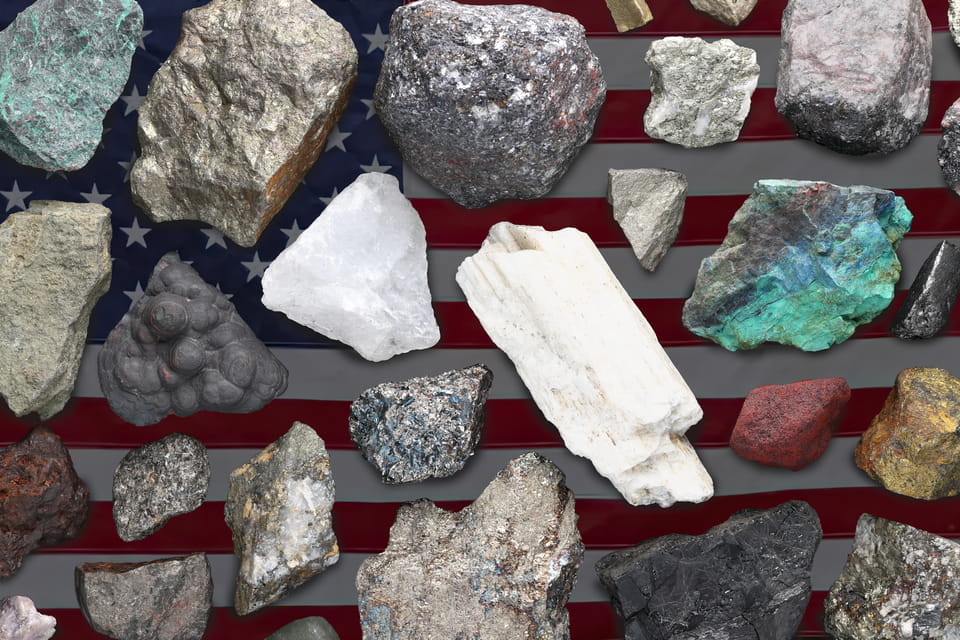
CBS News’ 60 Minutes investigation into MP Materials’ Mountain Pass rare earth mine tells a compelling story: two hedge fund managers revive America’s only active rare earth mine, refine neodymium to 99.9% purity, and supply magnets to GM and Apple. The Pentagon backs the venture with $400 million and a 15% stake.
But the feature also reveals a critical gap. Mining and refining rare earths is just the start.
Integrating those materials into resilient, auditable supply chains with verifiable provenance and compliance proof presents an entirely different infrastructure challenge.
Why Mining Alone Isn’t Enough
When Chinese retaliation last year slowed rare earth exports, the disruption was sudden and severe. Ford halted Explorer SUV production. Major manufacturers, as the 60 Minutes report notes, “didn’t even realize the extent of the rare-earth magnets that they had in their supply chain.”
MP Materials solved part the upstream problem: extraction. But that’s only part of the equation. The other part is ensuring materials move through compliant, auditable networks to buyers with full chain-of-custody documentation. It requires midstream infrastructure.
That’s the infrastructure M2i is built to provide.
Upstream, Midstream, and Resilience
M2i does not compete with miners like MP Materials. Instead, it handles the critical layer between raw material and end-use application: processing, quality assurance, tracking, and compliance integration.
Consider what happens after MP Materials produces refined neodymium: it needs tracking through transformation, verification against federal compliance thresholds (DPA, IRA), and staging for export or domestic integration.
That’s midstream work. It’s where materials become auditable supply chain assets.
Building Supply Chain Resilience
The Pentagon called for a “Manhattan Project” approach to rare earth supply chains. That language signals the scale of thinking required. Scale demands networks, not isolated production points.
True resilience comes from integrated platforms that connect mining and refining to final manufacturing with tracking, compliance, and logistics woven in at every stage. MP Materials is part of that network. So are downstream processors, QA nodes, and traceability infrastructure.
The 60 Minutes story is important precisely because it proves the thesis: production capacity alone doesn’t solve supply chain vulnerability. You need infrastructure that makes materials verifiable, compliant, and resilient.